Why VR Training for Law Enforcement Is Useful for High-Stress Decision-Making
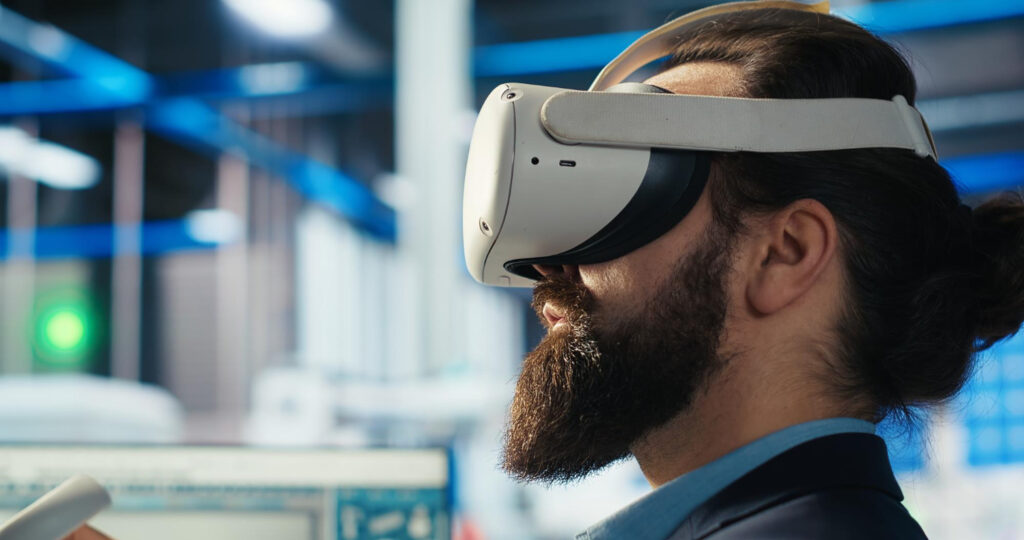
Some of the most difficult decisions in policing have to be made quickly, with limited information and under intense pressure. Officers may need to interpret behaviour, assess risk, communicate clearly and choose a proportionate response while several things are happening at once. This is where VR training for law enforcement can offer particular value, because it gives officers repeated exposure to realistic decision-making scenarios without the consequences of a real-world mistake. The aim is not simply to create a dramatic or immersive experience, but to help officers practise how they process information, respond to uncertainty and maintain judgement when stress begins to narrow their attention or distort their perception of what is happening.
Traditional classroom instruction still has an essential role because officers need to understand policy, legal principles, communication techniques and procedural expectations before they can apply them effectively. The challenge is that knowing what should happen in theory is not the same as making a sound decision while a person is shouting, bystanders are moving, information is incomplete and events are unfolding quickly. A simulated environment can bridge that gap by forcing the trainee to participate rather than observe. Instead of discussing what an officer might do in a hypothetical scenario, the trainee has to assess the situation, make a choice and then deal with the consequences of that choice as the exercise develops.
Stress can significantly affect the way people process information, and that has obvious implications for law enforcement. Under pressure, attention can narrow, memory can become less reliable and people can become overly focused on the most obvious threat while overlooking other details in the environment. An officer concentrating on one person may fail to notice movement elsewhere, or may become so focused on whether someone is complying that they miss information being offered by a witness. In some situations, the discomfort of uncertainty can also create pressure to act before enough information has been gathered. Scenario-based virtual training can expose these tendencies in a controlled way and make them visible during review, allowing the officer and instructor to examine not only what decision was made but why it was made.
That distinction is important because good law enforcement decision-making is not simply about speed. There are situations where rapid action is essential, but there are also situations where acting too quickly can make matters worse. A realistic training system can expose officers to both. In one scenario, taking additional time to ask a question, create distance or gather more information may produce the better outcome. In another, hesitation may increase risk and require a faster response. Repeated exposure to these differences helps officers learn that urgency should come from the circumstances themselves rather than from habit or expectation.
Ambiguity can make this kind of training especially valuable. Real incidents rarely begin with complete and perfectly reliable information. Officers often arrive with only a brief account from dispatch, a caller or a witness, and that account may be incomplete, mistaken or emotionally charged. A person behaving erratically may be frightened, intoxicated, confused, mentally unwell or genuinely aggressive, and those possibilities can look very similar in the first few moments of an encounter. Virtual scenarios can be designed to include that uncertainty, requiring trainees to gather information instead of relying too heavily on first impressions. This can reinforce the idea that observation and questioning are part of tactical judgement rather than separate from it.
The ability to repeat similar scenarios is another major advantage. One exposure to a difficult situation is rarely enough to improve judgement in a meaningful way. An officer may respond too quickly during the first attempt, discuss that decision afterwards and then immediately try a modified version of the scenario. The next version may contain different behavioural cues or a different outcome, preventing the trainee from simply memorising what happened before. This type of repetition helps turn abstract lessons into practical habits because the officer can test a different approach and see whether the result changes.
Communication can also be practised more realistically in this environment. Officers may understand the importance of calm language, clear instructions and active listening, but those skills can deteriorate when stress rises. Someone who communicates clearly in a classroom may begin issuing too many commands, speaking too quickly or interrupting before the other person has had time to respond. A simulated scenario can expose these habits in a way that ordinary discussion cannot. The officer can then see how communication affected the interaction and practise alternatives during a subsequent run.
This is especially useful in de-escalation training, where the quality of communication can have a direct effect on what happens next. A trainee may discover that a more confrontational tone increases tension, while a slower and clearer approach gives the other person time to process what is being said. In another scenario, a simple question may reveal that a person who initially seemed uncooperative is confused or frightened rather than deliberately resistant. These are subtle distinctions, but they can influence the direction of an encounter significantly.
Situational awareness is another skill that can be developed deliberately rather than treated as something officers either possess or do not. A virtual environment can introduce information from multiple directions, forcing the trainee to scan, reassess and avoid becoming fixated on one element of the scene. A routine interaction might suddenly involve a second person approaching from behind, a change in body language, or information from a bystander that alters the perceived level of risk. The trainee has to keep updating their understanding rather than relying on the assessment made during the first few seconds.
The debrief that follows the scenario can be just as important as the exercise itself. An officer can explain what they noticed, what they believed was happening and why they chose a particular response. The instructor can then compare that reasoning with what actually occurred in the scenario. This can reveal gaps between perception and reality that are difficult to identify any other way. An officer may be convinced that they gave a clear instruction when the playback shows several commands delivered rapidly with little time for compliance, or they may not realise that they overlooked an important cue because their attention was focused elsewhere.
This kind of review turns feedback into something specific rather than vague. Instead of simply being told that a decision was poor, the trainee can see the exact point where their interpretation changed and consider what information they missed. That process encourages self-awareness and can help officers become more reflective about their own judgement. It also creates a safer place to make mistakes, because the consequences are instructional rather than real.
Virtual training can also make scenario delivery more consistent. In traditional role-play, one officer may face a slightly different version of an exercise than another because an actor reacts differently or an instructor changes the pace. Those variations are not always harmful, but they can make performance comparisons less reliable. A digital scenario can preserve the same core conditions for multiple trainees, allowing instructors to compare how different officers respond to the same information.
At the same time, consistency should not become predictability. If officers know exactly what will happen each time, they may begin memorising responses rather than developing adaptable judgement. Strong simulation programmes can vary details while preserving the same learning objective. A traffic stop can involve a cooperative person in one version and someone who is anxious or agitated in another. A disturbance call can include different witnesses, environmental distractions or conflicting accounts. The lesson remains the same, but the route to that lesson changes.
This approach is useful because real policing rarely provides neat patterns. Officers need to apply principles rather than scripts. A response that worked well in one situation may be inappropriate in another that looks superficially similar. Training that introduces variation can reinforce the need to assess what is actually happening instead of assuming that familiar circumstances will produce familiar outcomes.
Another advantage is that simulation can help agencies identify broader training patterns. If many officers repeatedly overlook the same type of cue or make similar judgement errors, that may indicate a gap in the training programme rather than an isolated individual weakness. Departments can then adjust classroom instruction, scenario design or supervisory guidance to address the issue more directly. Over time, this creates a stronger feedback loop between training and operational performance.
Virtual environments can also be adapted to different levels of experience. A newer recruit may need relatively structured exercises that focus on observation, communication and basic decision-making. A more experienced officer may benefit from scenarios involving ambiguity, conflicting priorities and multiple people. Supervisors may require a different emphasis again, particularly where command decisions and coordination are involved. This flexibility allows the same technology to support different stages of professional development rather than being limited to one narrow type of exercise.
It is still important to recognise the limits of virtual reality. It should not replace classroom learning, live practical exercises, physical skills training or field experience. Officers need to understand legal standards and policy, and they also need to practise movement, coordination and physical responses in real environments. VR is most effective when it sits between theory and live application, giving officers a place to practise the mental side of decision-making repeatedly before those decisions have real consequences.
The real value of high-stress simulation is not that it makes training more dramatic. Its value comes from making thought processes visible. Officers can experience pressure, notice how their judgement changes and then examine that process afterwards. They can identify habits that would otherwise remain hidden, try different approaches and build greater confidence in managing uncertainty.
Over time, this repeated practice can help officers become more comfortable with situations where there is no immediate certainty. They can learn to distinguish between moments that require rapid action and those where patience, observation or communication may produce a better outcome. That distinction is difficult to teach through theory alone because it depends so heavily on context.
For law enforcement agencies, this makes virtual reality a practical tool for developing judgement rather than simply testing it. It creates a controlled environment where officers can make difficult choices, review those choices and improve before they face the same pressures in real life. High-stress incidents will never become entirely predictable, but training can help officers become more deliberate in how they respond to them.
That means gathering information, recognising changing circumstances, managing attention, communicating clearly and understanding how stress can influence perception. These are not simply technical abilities that can be memorised once and considered complete. They are habits of thought, and habits become stronger through repeated practice.